Source stainless steel pipe flange for Oil, Chemical, and Water
Compare 30 stainless steel pipe flange options from verified suppliers. Buyers can evaluate customization, sealing surfaces, and material grades like 304/316 for machinery, chemical, and water pipe systems.
Key considerations
Products List




Comprehensive Sourcing Guide
Strategic Sourcing Guide for Stainless Steel Pipe Flanges
Understanding Technical Specifications and Material Standards
When sourcing stainless steel pipe flanges, the primary objective is to align the component's physical properties with the operational demands of the specific piping system. The core material for these components is consistently identified as stainless steel, with specific grades such as 304 and 316 frequently cited in market listings. These grades offer distinct advantages regarding corrosion resistance and mechanical strength, making them suitable for a diverse range of industries including the machinery, chemical, oil and gas drilling, construction, and food and beverage sectors. The selection of the correct material grade is not merely a preference but a critical compliance factor, particularly in environments involving corrosive chemicals or high-pressure fluid transport.
The structural integrity of the flange is defined by its type and connection method. The market predominantly features welding flanges, which are designed to be welded directly to the pipe end, ensuring a robust and leak-proof joint. The connection interface is typically flanged, utilizing a sealing surface that can vary based on the application requirements. Common sealing surface profiles observed include Raised Face (RF) and Flat Face (FF). The choice between these profiles depends on the mating flange and the gasket material used; RF surfaces are standard for high-pressure applications, while FF surfaces are often preferred for low-pressure or corrosive environments where gasket compression is a concern.
Dimensional precision is another vital technical specification. Buyers must verify that the flange dimensions adhere to established international standards. The supply chain supports a wide array of standards, including GOST, GB, DIN, ANSI, JIS, and BSW. These standards dictate the outer diameter, thickness, and bolt hole patterns. For instance, bolt hole diameters can range significantly, with observed values including 11 mm, 14 mm, 18 mm, 22 mm, and extending up to 102 mm and beyond. Similarly, the bolt hole quantity varies, with common configurations including 4, 6, 8, 10, 12, 14, 16, 20, and higher counts depending on the flange size. The size range for these components typically spans from DN12 to DN100, though larger industrial sizes are available upon customization. Machining tolerances are critical for fitment; observed specifications indicate a tolerance of up to +/- 0.1mm, though this is often contingent upon specific customer drawings or the applicable standard.
Compliance Verification and Certification Protocols
Navigating the compliance landscape for stainless steel flanges requires a rigorous approach to verifying standards and certifications. While the market lists various international standards such as GOST, GB, DIN, ANSI, JIS, and BSW, buyers must not assume that every listed product automatically satisfies all these standards. Instead, the procurement process must begin with a clear definition of the required standard for the specific project. For example, a project in North America may strictly require ANSI standards, whereas a project in Russia or Eastern Europe might mandate GOST compliance. The presence of multiple standard names in a supplier's profile indicates capability rather than universal compliance.
Certification status is a critical area where buyers must exercise caution. While ISO 9001:2015 is a recognized quality management standard often associated with reputable manufacturers, it is not explicitly confirmed in the provided product data as a universal attribute for all listed items. Therefore, buyers should treat the mention of ISO 9001:2015 as a background possibility rather than a guaranteed fact for every supplier. The procurement strategy must involve requesting specific test reports and material certificates (such as Mill Test Certificates) that verify the chemical composition and mechanical properties of the stainless steel used. These documents should explicitly state the grade (e.g., 304 or 316) and confirm adherence to the specific standard (e.g., ASTM A182 for stainless steel flanges) required by the project specifications.
Furthermore, the manufacturing process itself is a key indicator of quality. The primary method observed is forging, which generally produces flanges with superior grain structure and mechanical strength compared to casting. Buyers should verify that the forging process is documented and that the resulting components meet the required pressure-temperature ratings. Customization is a significant feature of the market, with many suppliers offering tailored solutions for specific project needs. This includes customizing the outer diameter (OD), standard compliance, and even the surface treatment. Surface treatments such as polishing are available to enhance corrosion resistance and aesthetic appeal, which is particularly important for the food and beverage industry.
Cost Drivers and Pricing Dynamics
The pricing of stainless steel pipe flanges is influenced by a complex interplay of material costs, manufacturing complexity, and logistical factors. The observed price range in the market is extremely broad, spanning from $0.10 to $20,000 USD. This wide variance is not indicative of a single product type but rather reflects the diversity of flange sizes, pressure ratings, and material grades. A small, standard DN12 flange will naturally cost significantly less than a large, custom-forged DN100 flange made from high-grade 316L stainless steel. Buyers must understand that price is a function of volume and specification rather than a fixed market rate.
Material costs are the primary driver of the base price. Stainless steel 316, which contains molybdenum for enhanced corrosion resistance, is inherently more expensive than stainless steel 304. Consequently, flanges made from 316 will command a higher price point. Additionally, the manufacturing method plays a crucial role. Forged flanges, while offering better mechanical properties, involve higher production costs compared to cast alternatives. Customization further impacts pricing; orders requiring non-standard dimensions, specific bolt hole patterns, or unique surface treatments will incur additional tooling and machining costs.
Logistics and trade terms also significantly affect the final landed cost. The market supports various business terms including FOB (Free on Board), CIF (Cost, Insurance, and Freight), and CFR (Cost and Freight). The choice of freight method, whether air or sea, will drastically alter the delivery cost. Sea freight is generally more economical for large, heavy orders, while air freight is reserved for urgent, smaller shipments. The origin of the product, typically China, and the specific location of the manufacturer, such as Hebei, can influence shipping costs and lead times. Buyers should calculate the total cost of ownership, including freight, insurance, and potential customs duties, rather than focusing solely on the unit price.
Typical Applications and Industry Requirements
Stainless steel pipe flanges are ubiquitous in industries where hygiene, corrosion resistance, and structural integrity are paramount. The observed applications cover a broad spectrum, including the machinery industry, chemical processing, special purpose equipment, oil and gas drilling, construction, and the food, beverage, and dairy sectors. In the chemical and oil and gas industries, the flanges must withstand high pressures and corrosive media, necessitating the use of high-grade stainless steel and precise sealing surfaces like RF. The robust nature of forged flanges makes them ideal for these demanding environments.
The food and beverage industry imposes strict hygiene standards. Flanges used in this sector often require polished surface treatments to prevent bacterial growth and facilitate easy cleaning. The use of stainless steel 304 or 316 is standard here to ensure that the material does not contaminate the product. Similarly, in water pipe systems, the longevity and resistance to rust are critical, making stainless steel flanges a preferred choice over carbon steel. The versatility of these components allows them to be used in specialized applications such as drilling equipment, where vibration and pressure fluctuations are common.
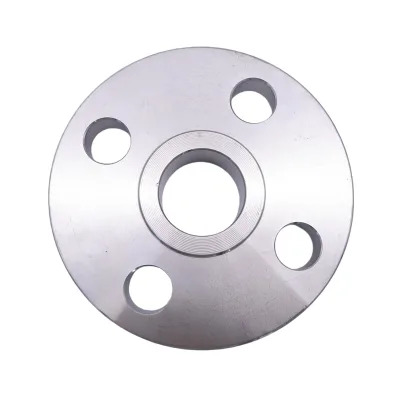
The structural shape of the flanges is consistently round, which is the standard for pipe connections. This geometry ensures uniform stress distribution and a secure fit. The packaging methods, ranging from wooden cases to seaworthy packing and standard export packages, are designed to protect the flanges during transit, especially for international shipments. The ability to provide samples is a valuable feature for buyers looking to verify quality before committing to large orders. This capability allows for practical testing of the flanges in the intended application environment, ensuring that the specifications meet the operational requirements.
Supplier Evaluation and Procurement Strategy
Evaluating suppliers for stainless steel pipe flanges requires a multi-faceted approach that goes beyond price comparison. Buyers should prioritize suppliers who demonstrate flexibility in customization and a clear understanding of international standards. The availability of customization options, including specific dimensions and standard compliance, is a strong indicator of a supplier's capability to meet unique project needs. The ability to provide samples is another critical factor, as it allows buyers to physically inspect the product quality, surface finish, and dimensional accuracy before placing a bulk order.
The minimum order quantity (MOQ) is a significant consideration in the procurement strategy. The observed MOQ range varies from 1 to 500 units, with some suppliers specifying an MOQ of 10 pieces. This flexibility allows buyers to test the market with smaller orders or fulfill immediate project needs without committing to large inventories. However, buyers should be aware that lower MOQs may come with higher per-unit costs. The delivery time is noted as variable, depending on the situation, which suggests that lead times can fluctuate based on order volume, customization requirements, and production schedules. Buyers should establish clear communication channels to manage expectations regarding delivery timelines.
Geographic origin and export capabilities are also important. The majority of the supply originates from China, with specific manufacturing hubs in regions like Hebei. The ability to export to all over the world indicates a mature supply chain capable of handling international logistics. Buyers should verify the supplier's experience with the specific trade terms (FOB, CIF, CFR) relevant to their location and ensure that the freight method (air or sea) aligns with their project timeline and budget. The advantage of high quality and low factory price is a common claim, but buyers must validate these claims through third-party testing and reference checks.
Quality Control and Long-Term Procurement Considerations
Ensuring long-term reliability in stainless steel pipe flange procurement requires a robust quality control framework. The machining tolerance of up to +/- 0.1mm is a specific metric that buyers should verify through dimensional inspection. While some tolerances are standard, others depend on the specific standard or customer drawing. Buyers should insist on detailed inspection reports that confirm these tolerances are met. The sealing surface, whether RF or FF, must be inspected for surface finish and flatness to prevent leaks. The surface treatment, such as polishing, should be verified to ensure it meets the hygiene and corrosion resistance requirements of the application.
Long-term procurement considerations include the durability and working life of the flanges. Suppliers often highlight advantages such as long working life and high quality, which are critical for reducing maintenance costs and downtime. Buyers should look for evidence of these claims, such as case studies or references from similar industries. The packaging, which may include inner plastic bags, cartons, and pallets, plays a crucial role in maintaining the quality of the flanges during storage and transport. Seaworthy packing is essential for international shipments to prevent damage from moisture and rough handling.
Finally, the business terms and export capabilities of the supplier should be aligned with the buyer's risk management strategy. The availability of various trade terms allows buyers to control their logistics and insurance costs. The ability to provide samples and customize products ensures that the procurement process is flexible and responsive to changing project needs. By focusing on these quality control and strategic factors, buyers can build a reliable supply chain for stainless steel pipe flanges that supports their operational goals and minimizes risk. The combination of technical precision, compliance verification, and supplier flexibility forms the foundation of a successful procurement strategy in this specialized market.
FAQs
What materials are used for stainless steel pipe flanges?
Stainless steel pipe flanges are primarily made from Stainless Steel 304 and 316 grades. These materials offer high corrosion resistance and mechanical strength suitable for chemical, oil, and food industries.
Which connection types are available for these flanges?
The available connection types include Flanged and Welding configurations. Buyers can select from Raised Face or Flat Face sealing surfaces depending on their specific pressure and gasket requirements.
Can suppliers provide samples for quality verification?
Yes, suppliers can provide samples for quality verification before bulk orders. This allows buyers to inspect dimensions, surface treatment, and material integrity against their project specifications.
What standards do these flanges comply with?
These flanges comply with multiple international standards including GOST, GB, DIN, ANSI, JIS, and BSW. Specific compliance depends on the customer drawing and the chosen product standard.
How is the manufacturing process defined for these products?
The manufacturing process is defined as Forging, which ensures superior grain structure and mechanical strength. This method is preferred for high-quality applications requiring durability and precision.
What is the typical minimum order quantity for these flanges?
The minimum order quantity ranges from 1 to 500 pieces, with some suppliers setting an MOQ of 10 pieces. This flexibility allows for both small trial orders and large industrial purchases.
Which industries commonly use these stainless steel flanges?
Common industries include machinery, chemical processing, oil and gas drilling, construction, and food and beverage sectors. The material properties support diverse applications from water pipes to specialized drilling equipment.